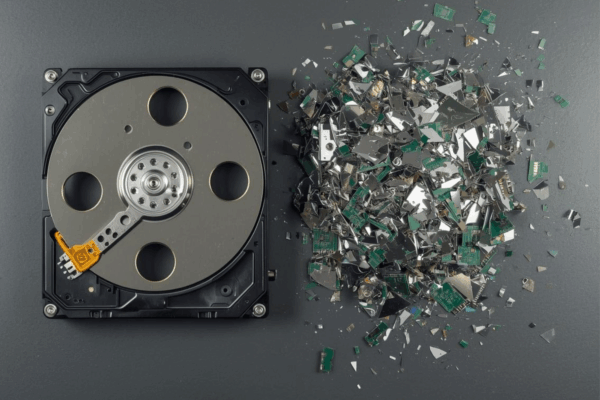
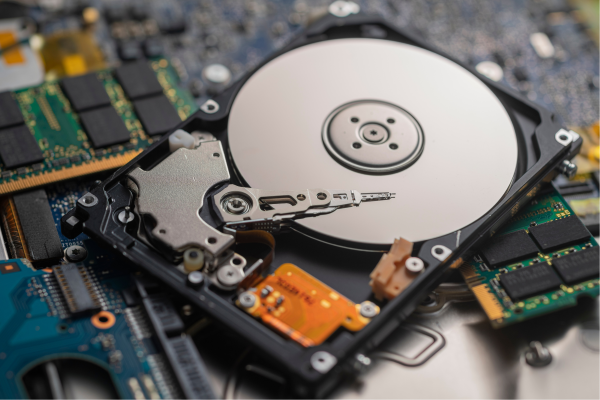
When a business decommissions old computers or servers, physical hard drives become a primary data risk. Some teams try to mitigate that risk by drilling holes in the drives before disposal, assuming this method destroys the data. Unfortunately, it doesn’t. The Challenge: Physical Damage Isn’t Data Erasure While drilling holes may damage parts of the...Continue Reading
The Growing Scrutiny Around Data Destruction Across every regulated industry, data privacy expectations are tightening. With updates to HIPAA enforcement, state-level data protection laws like the Massachusetts Data Security Regulations (201 CMR 17.00), and renewed focus from the FTC on proper disposal of consumer information, 2026 is shaping up to be a year of closer...Continue Reading
When a dermatology clinic tossed patient specimen containers—still bearing lab labels and identifiers—into regular trash bins, it seemed like just routine cleanout. What they didn’t realize was that the containers held Protected Health Information (PHI). That single lapse triggered an OCR investigation, ultimately resulting in a $300,640 settlement and a multi-year corrective action plan. (see...Continue Reading
October marks Cybersecurity Awareness Month, a timely reminder for IT leaders to take a comprehensive look at their organization’s risk posture. Much of the focus during this season centers around firewalls, software patches, and endpoint protection. But one foundational element remains consistently under-addressed: secure data destruction. Specifically, the role of physical destruction in a robust...Continue Reading
Schools and universities manage vast amounts of sensitive data—from student transcripts and health records to staff employment files. Students, guardians, administrators, and compliance officers all expect this information to remain confidential. Yet, improper disposal of outdated or unused documents poses a serious risk: exposure of personally identifiable information (PII), identity theft, regulatory penalties, and damage...Continue Reading
In the modern business landscape, decisively disposing of obsolete storage media isn’t just good practice—it’s essential to protect privacy, security, and regulatory compliance. Yet many large organizations still rely on in‑house or makeshift methods: deleting files, reformatting hard drives, physically breaking old devices, or tossing them into recycling bins without proper oversight.. These approaches expose...Continue Reading
Every organization—regardless of industry—faces the dual mandate of protecting sensitive information and staying compliant with evolving laws and regulations. Without a clear, consistently enforced data destruction policy, companies risk data breaches, regulatory penalties, and reputational harm. And the urgency is only growing. As a recent article in TechRadar Pro points out, the rise of generative...Continue Reading
It’s easy to let paper records accumulate—just in case you might need them someday. But the truth is, holding onto outdated documents can do more harm than good. Beyond the clutter, these records may contain sensitive information that exposes your business to compliance risks, data breaches, and even legal trouble. Proactively clearing out obsolete files...Continue Reading
Remote and hybrid work have become the norm for many companies, but they bring new challenges for data security—especially when it comes to proper disposal. When employees are working from various locations, it’s harder to maintain consistent oversight of how sensitive materials are handled and destroyed. Printed documents might not be shredded, digital devices could...Continue Reading
Data breaches can strike any industry, but some sectors face higher risks due to the nature of the data they handle. Here’s a look at which industries are most at risk—supported by external data—and practical, tailored advice—including secure data destruction—to help with data breach prevention. 1. Healthcare According to the IBM Cost of a Data...Continue Reading