A CPA firm may keep years of client tax files, payroll records, financial statements, bank documents, workpapers, and scanned source documents. Much of that information contains Social Security numbers, tax IDs, account numbers, payroll data, and other confidential details. When those records are no longer needed, the firm still has to control them. Accounting firm...Continue Reading
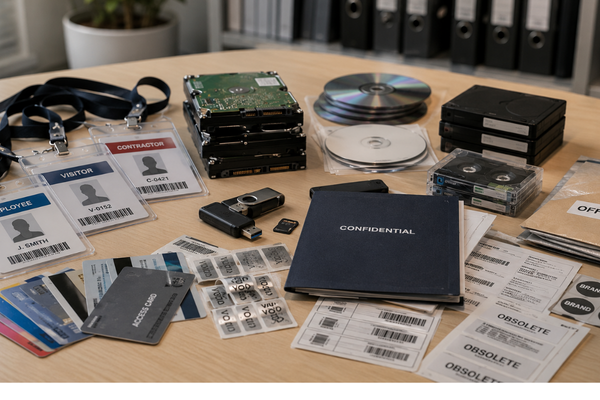
A retired employee badge gets tossed into a desk drawer. A box of outdated branded materials sits near the loading dock. Defective items with customer labels are set aside for disposal. Old media, access cards, prototypes, and returned goods are treated like routine waste because they do not look like traditional records. That is where...Continue Reading
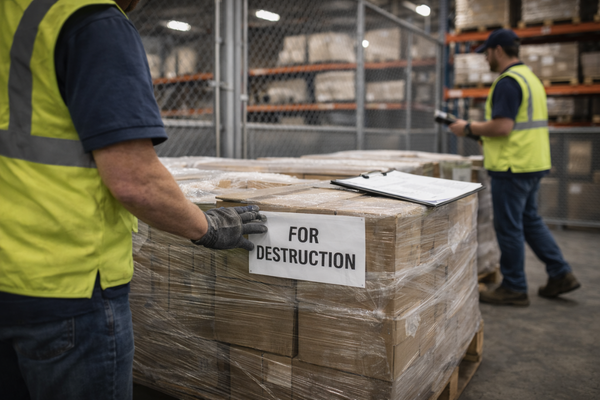
In a warehouse, disposal problems rarely look serious at first. A pallet gets damaged. Returned items start to pile up. Rejected labels are left near a packing station. An old scanner is pulled from service and set aside for later. In a busy operation, those are normal events. They also create risk when materials that...Continue Reading
Municipal offices manage large volumes of records that contain personal and confidential information. Property tax files, permit applications, payroll records, personnel documents, and utility billing information all move through town halls and administrative departments every day. These records are necessary for government operations, but they also create risk once they reach the end of their...Continue Reading
For compliance leaders, the risk of a data breach does not end when records reach the end of their retention period. In many enforcement cases involving healthcare providers, law firms, and financial institutions, the failure occurred during disposal, not during storage or transmission. Investigators regularly find sensitive records in dumpsters, unlocked recycling bins, or abandoned...Continue Reading
Across New England warehouses, off-spec inventory is a routine operational reality. Pallets arrive damaged. Labels are printed incorrectly. Products expire before shipment. What often gets underestimated is how quickly these situations move from inventory issue to compliance exposure. Off-spec product destruction is not an administrative afterthought—it is a defined control point that regulators, auditors, and...Continue Reading
Healthcare organizations across New England are facing increased scrutiny around medical record destruction HIPAA compliance. Recent enforcement actions make it clear that regulators are no longer focused only on how medical records are stored, but on how they are destroyed once retention periods expire. For practice administrators, HIM directors, compliance officers, and medical office managers,...Continue Reading
Closed files don’t feel urgent—until a box gets misplaced, a “quick cleanout” skips secure bins, or an old device leaves the building without a clear wipe or destruction record. Today, most firms don’t have one file to manage. They have paper, scans, email, cloud folders, copier storage, old laptops, backup images, and eDiscovery exports that...Continue Reading
The Challenge As another year closes, offices, warehouses, and municipal departments are tackling the same seasonal task: cleaning out documents that have piled up over the past 12 months. But year-end document shredding isn’t just about freeing up storage space—it’s a vital part of data security, regulatory compliance, and organizational clarity. Outdated records can expose...Continue Reading
Environmental sustainability and data security may seem like separate challenges—but for today’s compliance-driven organizations, they are deeply connected. In industries handling sensitive records, from healthcare to manufacturing, secure disposal practices aren’t just about meeting privacy laws. They also present a measurable opportunity to reduce waste and contribute to broader ESG (Environmental, Social, and Governance) initiatives....Continue Reading