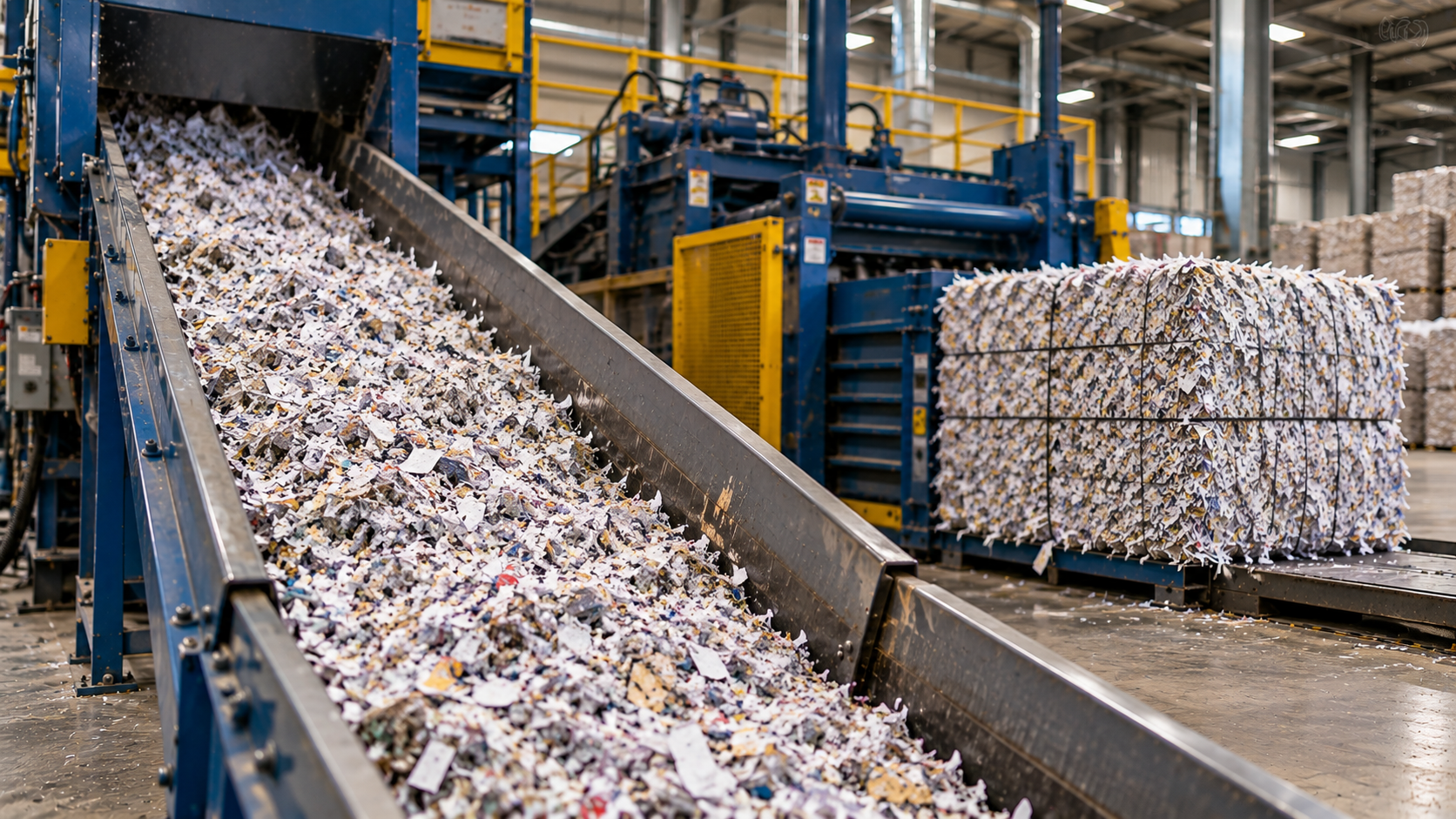
Once confidential documents go into a locked shredding container, most employees never see them again. For the office or facilities manager responsible for those records, what happens next is important. Confidential paper should not simply leave the building and enter an unknown waste stream. Law firms, accounting offices, medical practices, government agencies, and other organizations...Continue Reading
When a government agency hires an outside company to destroy confidential records, hard drives, evidence, or other sensitive material, that material leaves the agency’s direct control before it is destroyed. The RFP needs to account for that period. Who picks up the material? How is it secured in transit? Where is it destroyed? Does another...Continue Reading
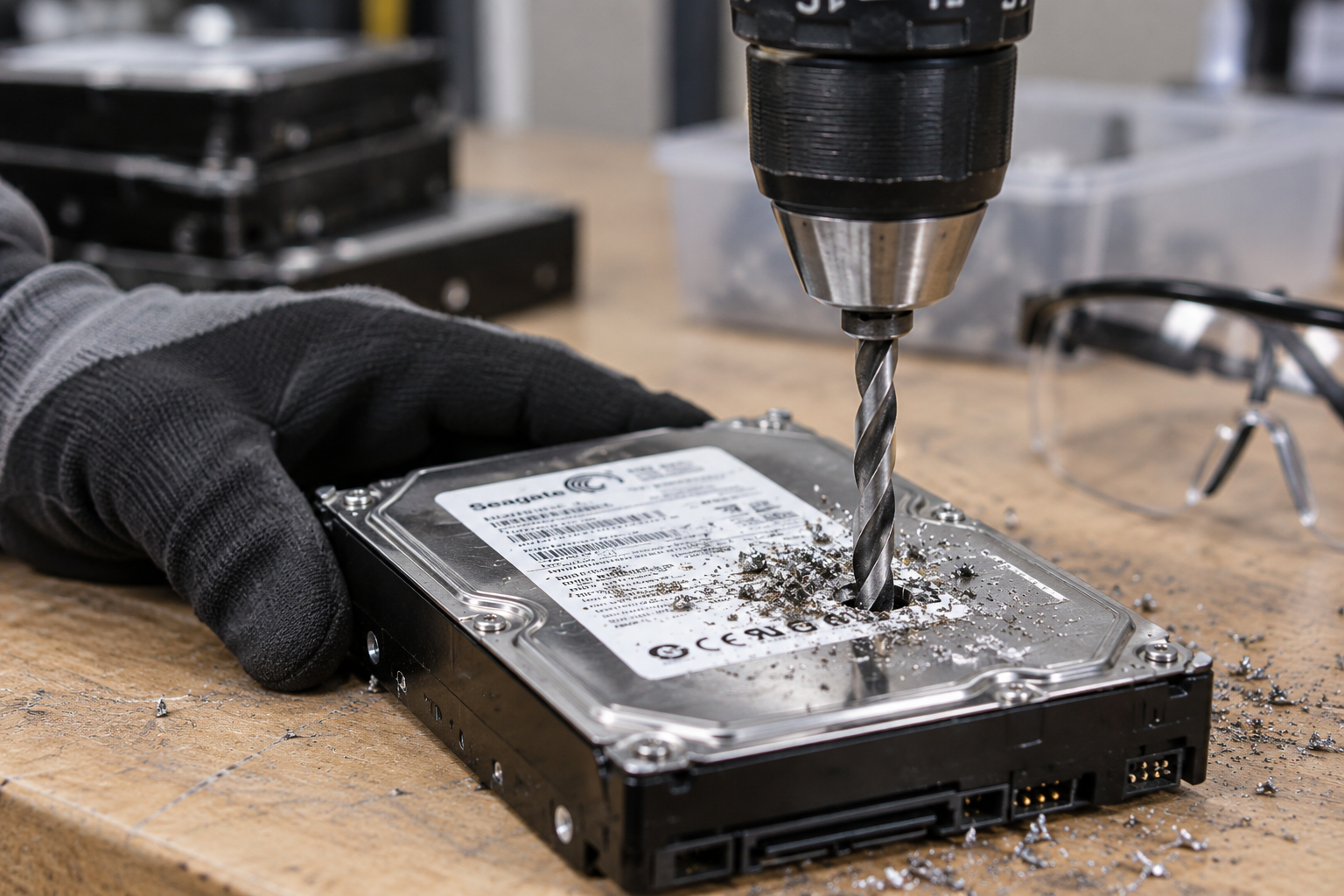
A business retires a group of computers and drills holes through the hard drives before sending the equipment for recycling. The drives no longer work. Has the data actually been destroyed? No. Drilling a hole in a hard drive can make the drive unusable, but it does not guarantee that all data on the platters...Continue Reading
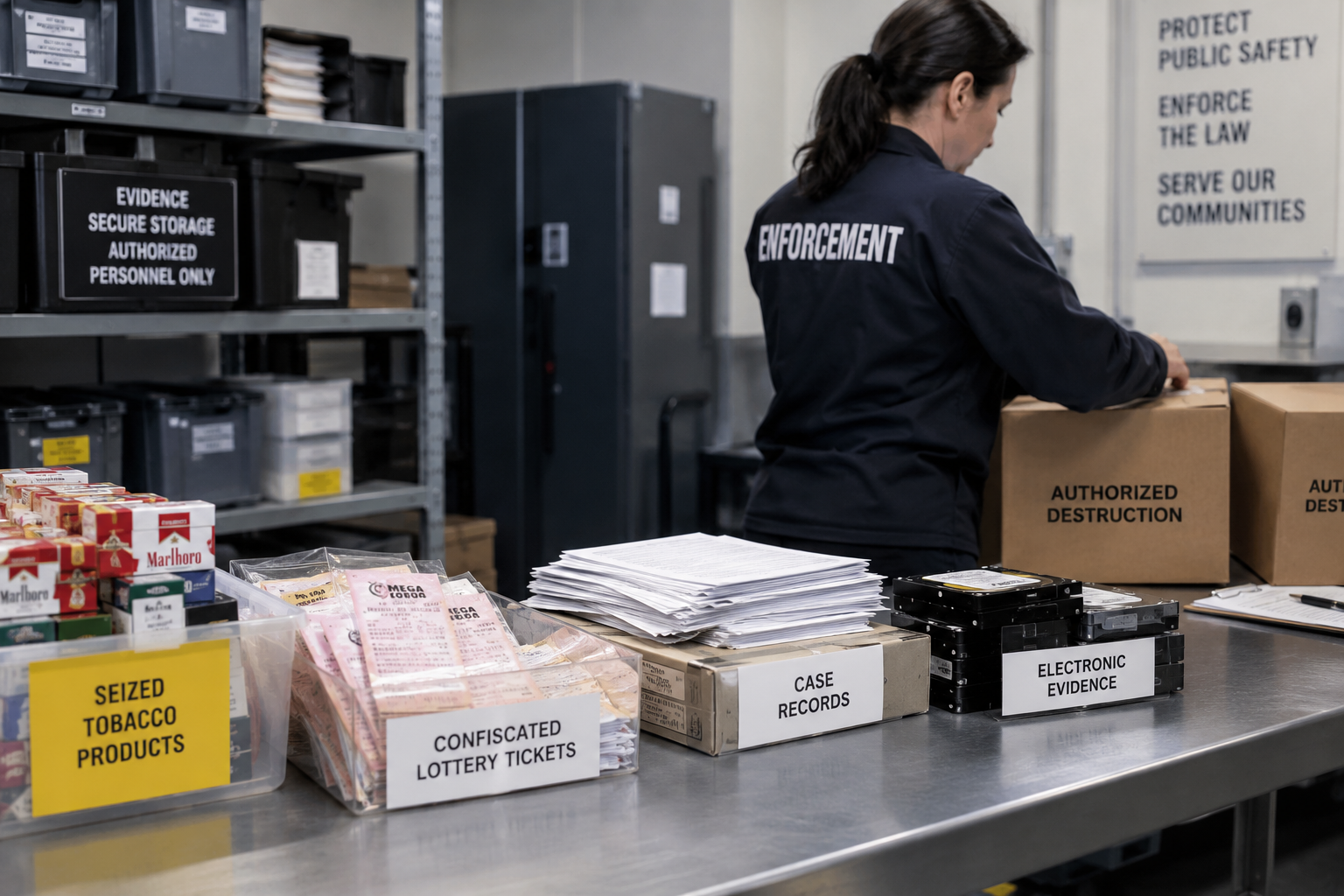
A lottery enforcement unit closes an investigation involving confiscated tickets, retailer records, claim documentation, and electronic files. A tobacco enforcement team may be holding seized products along with invoices, inspection reports, photographs, and retailer, employee, or other personally identifiable information collected during an investigation. Some of those materials will eventually be eligible for disposal. Closing...Continue Reading
A rejected production run can become a legal and brand problem if the products are not properly destroyed. A pallet of defective branded goods may be written off internally, but if those products leave the facility intact, they can still be resold, reused, or diverted into unauthorized channels. That creates a basic compliance question: Can...Continue Reading
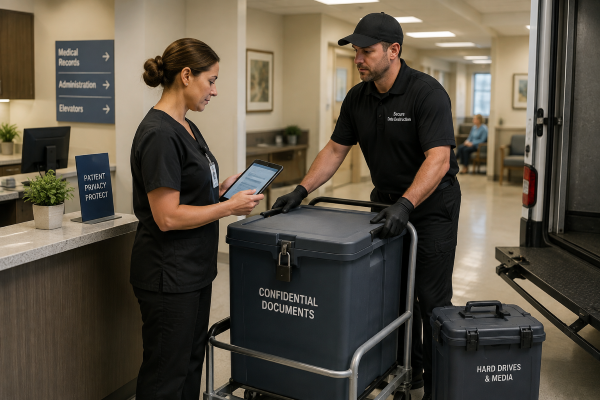
A healthcare organization sends archived patient records and retired hard drives out for destruction. Months later, an auditor asks who took custody, whether every drive was accounted for, when destruction took place, and what records confirm that the work was completed. A pickup receipt may confirm that material left the facility, but it does not...Continue Reading
A hospital equipment refresh can create a compliance problem quickly. A workstation taken out of service may still hold cached patient data. A copier may store scanned insurance forms on its internal hard drive. A diagnostic device may contain patient identifiers, images, service logs, or network credentials. If those assets are moved into a storage...Continue Reading
When confidential records leave your facility for shredding, hard drive destruction, or media disposal, the security obligation does not leave with them. A misplaced box of personnel files, an untracked laptop, or a pickup with incomplete paperwork can create legal, regulatory, and reputational problems long after the material is out of sight. For compliance officers,...Continue Reading
A records manager schedules a cleanout after an office move. Boxes of HR files, customer records, retired laptops, and backup drives are staged for pickup. The vendor loads the material and provides a receipt. Weeks later, an auditor asks how the organization confirmed secure custody and final destruction. That is where many vendor reviews fall...Continue Reading
A returned pallet arrives with damaged packaging and no clear resale approval. A short-dated product sits in quarantine while Quality decides whether it can be released. These are routine warehouse problems, but they become risk when the disposition is unclear. For warehouse operations managers, EHS managers, quality teams, and brand protection staff, the question is...Continue Reading